Rwanda is a landlocked country in East Africa with a green mountainous landscape. It has a temperate tropical highland climate, with lower temperatures than are typical for equatorial countries due to its high elevation.
It is bordered by Uganda to the North, Tanzania to the East, Burundi to the South and the Democratic Republic of Congo to the West.
Rwanda is one of the safest countries in the world, ranked 1st in Africa and 5th globally by the World Economic Forum (WEF).
Rwanda is also ranked 29th globally by the World Bank’s Doing Business 2019 report.
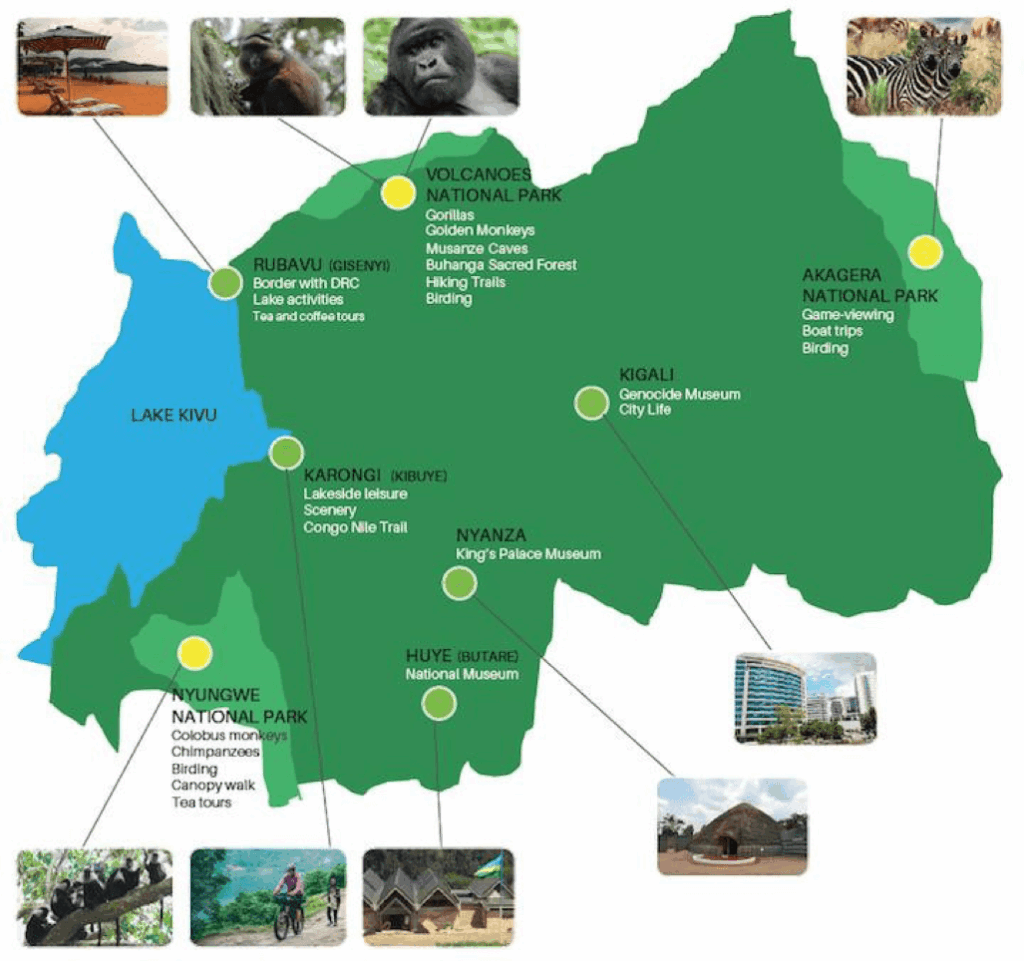
Rwanda is open to everyone as a visa is issued on arrival for all citizens of the world. In the space of a week it is possible to experience many highlights thanks to the relatively compact size of our country. With a population of slightly over 12 million, Rwanda is geographically small and one of the world’s most densely populated countries.
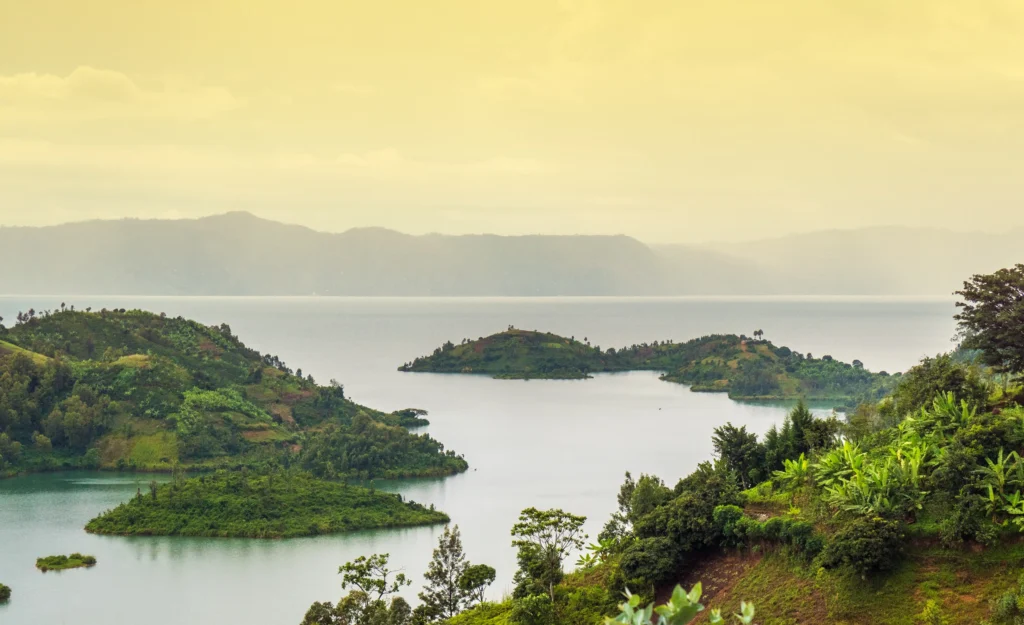
Rwanda is home to some of Africa’s most beautiful scenic views and is one of three countries in the world where visitors can see the majestic mountain gorillas – no longer critically endangered thanks to national conservation efforts.
General Tips
- Mwaramutse – Good morning
- Mwirirwe – Good afternoon/evening
- Muramuke – Good night
- Amakuru yawe – How are you?
- Ni Meza – Fine
- Murakoze – Thank you
- Cyane – Very much
- Yego – Yes
- Oya – No
- Amafaranga – Money
Official holidays in public and private sector shall be determined as follows:
1st January: New Year’s Day
2nd January: Day after New Year’s Day
1st February: National Heroes Day
Good Friday
Easter Monday
7th April: Genocide against the Tutsi Memorial Day
1st May: Labor Day
1st July: Independence Day
4th July: Liberation Day
Friday of first week of August: Umuganura Day
15th August: Assumption Day
25th December: Christmas Day
26th December: Boxing Day
EID EL FITR: the date shall be announced each year by Rwanda Moslems Association
EID AL-ADHA: the date shall be announced each year by Rwanda Moslems Association
Coincidence of official holidays with the days of weekend
Except 7th April, Genocide against the Tutsi Memorial Day, if an official holiday falls on one
(1) day of the weekend, the following working day shall be an official holiday. If two (2) consecutive official holidays fall on a day of weekend, the two (2) official holidays shall be compensated in one (1) working day that follows. In case of coincidence of two (2) official holidays, the following working day shall be an official holiday to compensate one (1) of the two (2) coinciding official holidays.
Rwanda can be visited throughout the year. Gorilla trekking and other forest walks are less demanding during the drier months. The European winter is the best time for birds, as Pala arctic migrants supplement resident species.
Binoculars greatly enhance game drives, forest walks and bird watching. Bring a camera and an adequate stock of film. Print film is available but transparency film is not. Toiletries and other essentials can be bought in the cities.
Dress codes are informal. Daytime temperatures are generally warm, so bring lots of light clothing, supplemented by light sweaters for the cool evenings and heavier clothing for the Volcanic and Nyungwe National parks. When tracking gorillas, wear sturdier clothing to protect against stinging nettles, and solid walking shoes. A hat and sunglasses provide protection against the sun, and a waterproof jacket may come in handy in the moist mountains.
Rwanda has an excellent cell phone network covering almost the entire country. International phone calls can be made easily. Appropriate SIM cards for the network are readily available everywhere, even in remote towns. Cell phones can be purchased or rented from major shops in Kigali. Most towns have several Internet cafes and computer centres.
Rwanda has strict environmental laws. The use of plastic bags (polythene papers) has been banned. Beware not to carry such since they will not be allowed into the country at the border checkpoints. Kigali is a clean and green city. You are expected to throw your litter in rubbish cans which are fitted all over. Walk along the provided foot paths. Do not step on the grass.
A certificate of yellow-fever vaccination is required. Much of Rwanda lies at too high an elevation for malaria to be a major concern, but the disease is present and prophylactic drugs are strongly recommended. It is advisable not to drink tap water. Bottled mineral water can be bought in all towns. Hospitals are located in all major towns.